



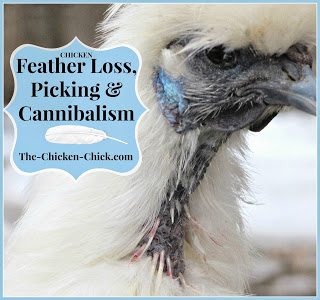
I get lots of questions on my Facebook page about chicken feather loss, usually asking how to stop it, but before any solution can be suggested, the underlying problem must be identified. Feather loss and bald spots are often the result of stress-related conditions that must be fixed so that feather picking does not degenerate into a flock-wide problem. Chickens are cannibals and they learn to pick from each other, so ending unwanted picking as soon as it begins is critical to avoiding a bloody epidemic. 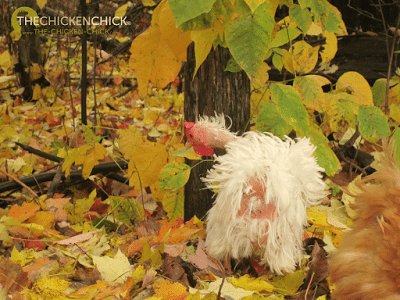
MOST COMMON CAUSES OF FEATHER LOSS
MOLTING
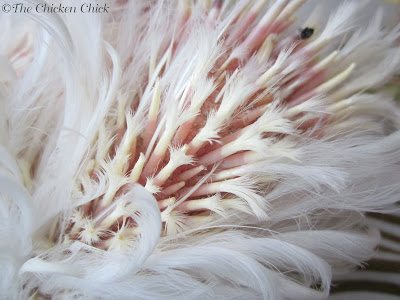
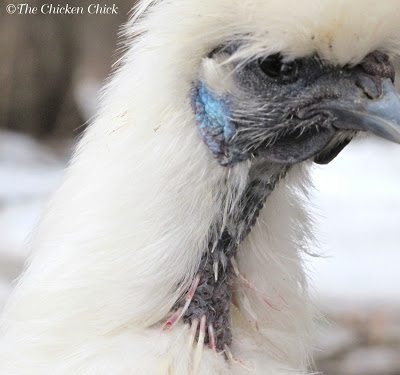
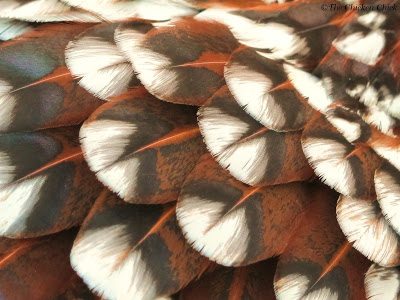
Bald spots are common in chickens during a molt. Molting is the natural, regular shedding of old feathers and growth of new ones. Chickens molt in a predictable order beginning at the head and neck, proceeding down the back, breast, wings and tail. Molting occurs at fairly regular intervals for each chicken, and ordinarily begins as daylight hours shorten at the end of summer, however, it can occur at any time due to lack of water, food, or sudden change in normal lighting conditions.
SOLUTION
Learn the normal molting patterns of flock members so that bald spots due to molting are recognized as normal. Be alert for broken pin feathers and pecking from other flock members. Separate any bird with damaged or bleeding pin feathers from the flock to prevent further injury.
BROODINESS
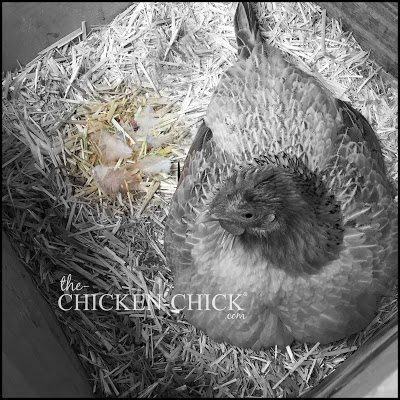
A broody hen is one that is inspired to sit on a collection of eggs until she hatches chicks. She plucks her own breast feathers to expose the warmth and moisture of her skin directly to the eggs, hence the expression “to feather one’s nest.” After a period of broodiness, a hen’s hormones begin to return to normal levels as do her eating and drinking routines, all of which results in the loss of large amounts of feathers. Broody hens tend to molt furiously after a period of broodiness as they resume eating and drinking habits.
SOLUTION
Break up broody hens that will not be permitted to hatch eggs to stop the hormone roller-coaster and prevent a prolonged interruption in normal eating, drinking and elimination routines.
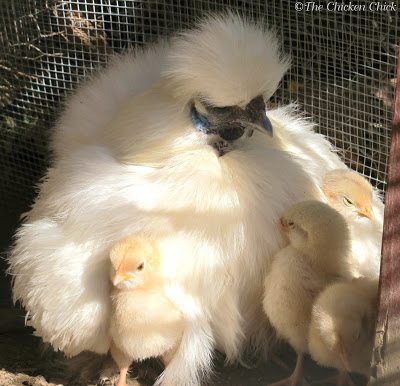
After a hen has hatched chicks, feed her and her chicks with starter ration, which is higher in protein that the layer feed she had been eating prior to becoming broody and will help supply her with the protein needed for feather re-growth.
OVERCROWDING
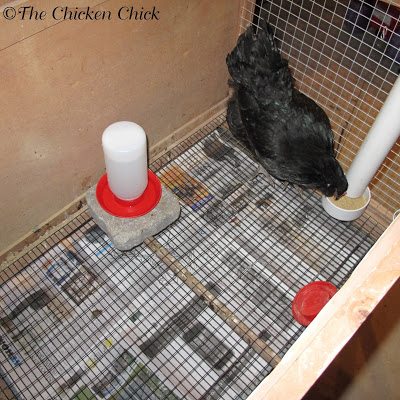
A chicken is naturally inclined to forage for food by scratching and pecking at the ground. When too many chickens occupy too small a space, pecking opportunities are limited and chickens get on each other’s nerves.
Aggression can result from overcrowding which leads to feather picking and cannibalism. Birds with little personal space will also begin picking at novelties on one another such as a fleck of dirt, a pin feather shaft, or an insect. Innocent exploration can easily result in small skin wounds.
Chickens are drawn to the sight of blood and one small skin wound can quickly become life-threatening injuries inflicted by many chickens. By nature, chickens are cannibalistic- they can and will kill another chicken.
SOLUTION
Space is one of the keys to happy, healthy chickens. The bare minimum space requirements are four square feet per bird in the coop and ten square feet per bird in the run. If chickens will be confined primarily to the coop and run daily, a much greater space allowance must be made to avoid feather picking and boredom.
BOREDOM
Just as with children, bored chickens will get into mischief. Chickens that are confined primarily to the coop and run daily are more inclined to begin feather picking out of boredom and curiosity than free-range chickens.
Free-range chickens seldom run into trouble with boredom, but when inclement weather prohibits free-ranging, boredom-busting activities can be offered.
Chickens kept on a restricted feeding program, versus a free-feeding regimen, may become bored in between feedings, leading to feather picking and problem pecking of each other.
SOLUTIONS
Same solution as overcrowding, above and introduce boredom-buster type activities. Always free-feed chickens instead of rationing their food several times per day. The full-time job of a chicken is eating and their digestive tract is designed to hold and process small amounts of food at a time. Chickens require access to a nutritionally complete chicken feed all day, every day. Being allowed to pick up small amounts of feed often throughout the day gives them the tools to do their job, eliminates competition for feed, and provides an activity with a purpose.
Provide feed in crumbles form instead of pellets to extend the amount of time birds spend procuring feed to satisfy their appetites. Treats or snacks can be employed as an occasional distraction in small amounts, but should not be relied upon as a primary form of entertainment. Remove treats after 15 minutes.
No more than 5% of a chicken’s diet should consist of extras other than layer feed to ensure the consistent consumption of a balanced diet.
NUTRITIONAL DEFICIENCIES
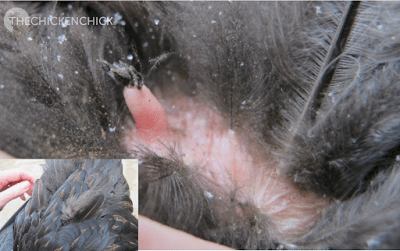
Laying hens are sensitive to omissions in nutrient imbalance. An unbalanced diet can result in behavior problems such as excessive picking at their own preen gland, the feathers around it and feathers of other birds. Feeding chickens too many treats/snacks/kitchen scraps can interfere with daily nutritional requirements, causing aggression and problem picking behaviors.
SOLUTION
Provide a nutritionally complete feed appropriate for the age of the bird. Limit treats/snacks/extras to 5% of their total daily diet. Better yet, skip the treats entirely as chickens do not benefit from them.
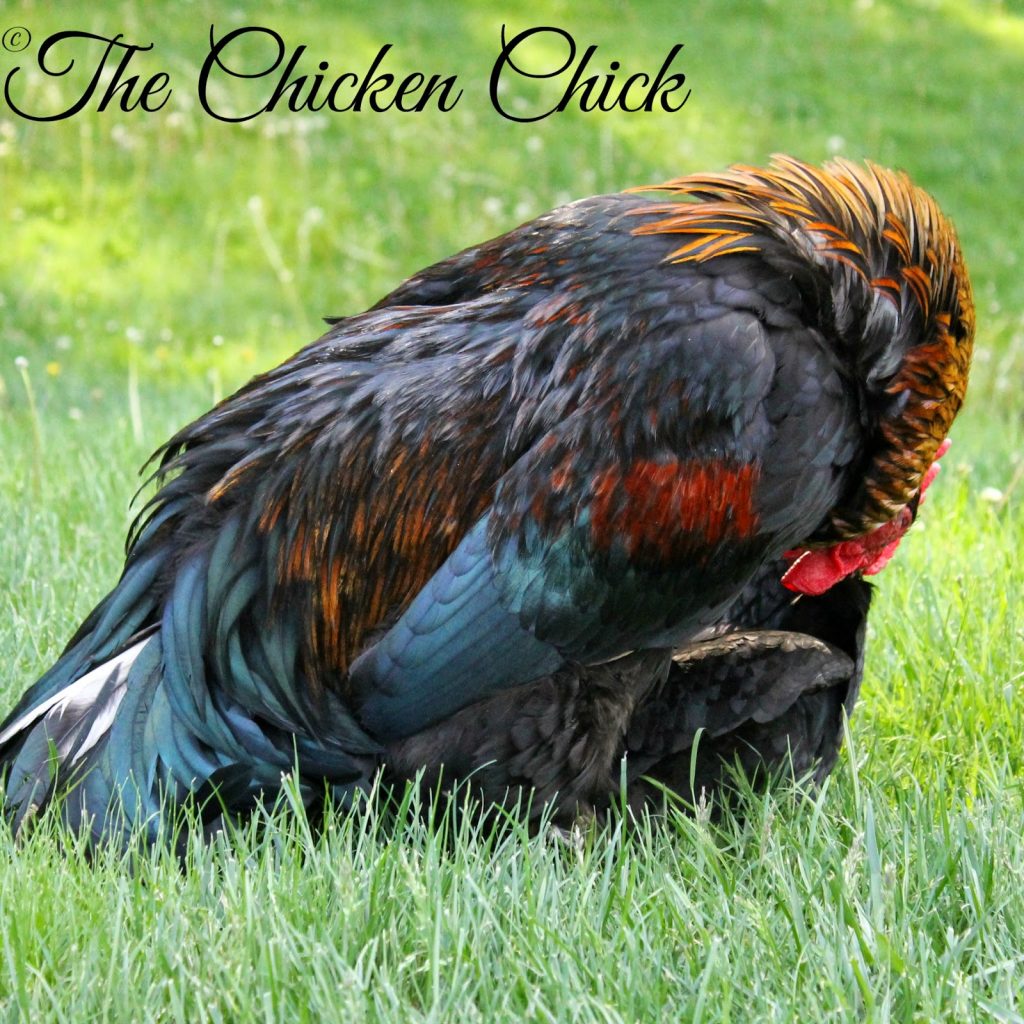
When a rooster assumes the mating position on top of a hen, he balances himself by holding onto her neck feathers with his beak and standing on her back (also known as treading).
Over time, treading can result in feather loss to both areas of the hen’s back. Roosters can favor particular hens, giving them more attention than others, thereby causing excessive damage to their feathers and skin.
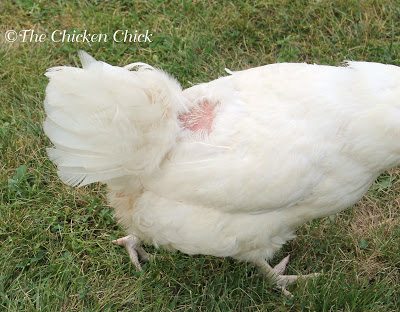
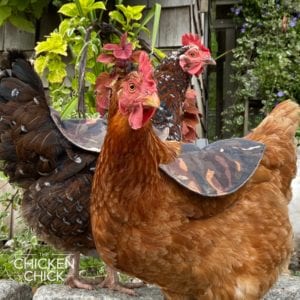
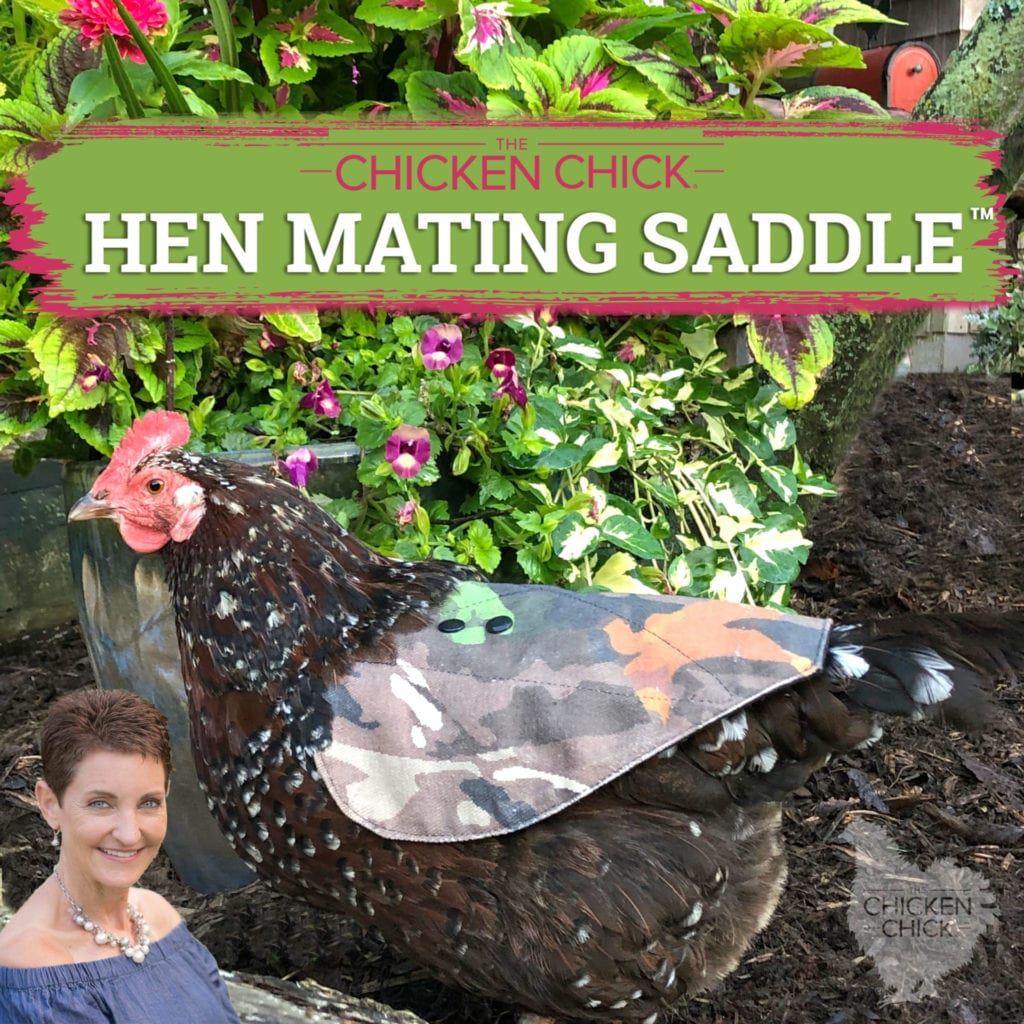
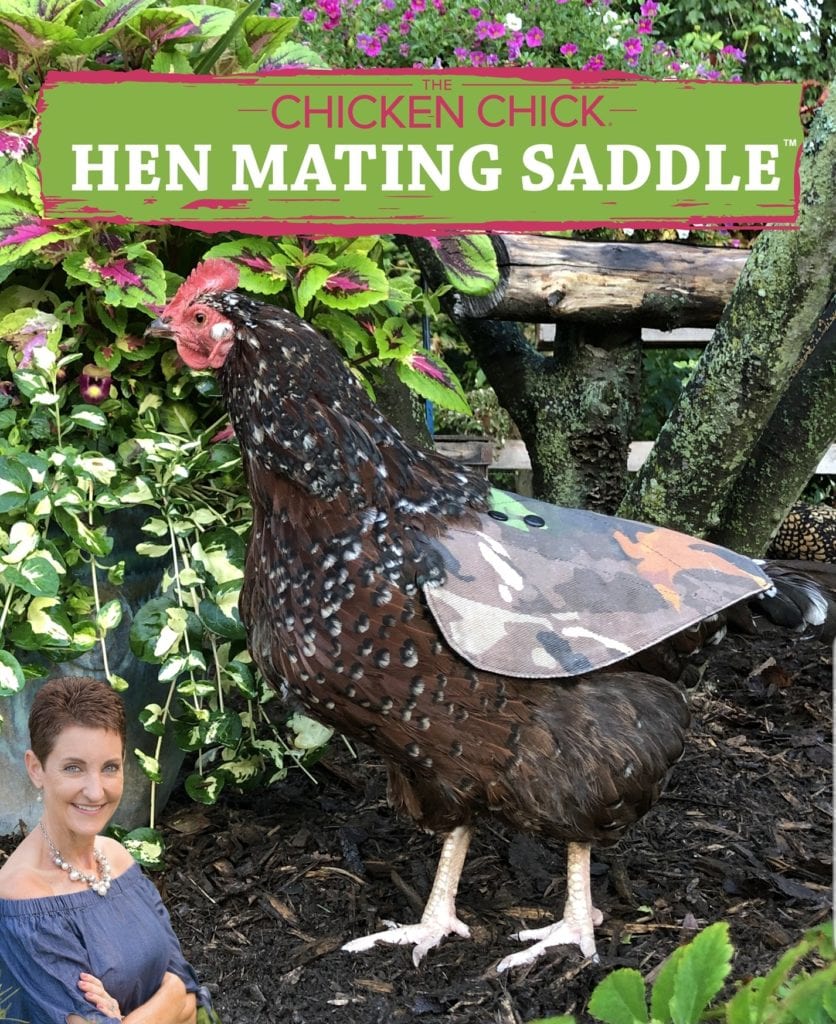
Chicken Chick® Hen Mating Saddles protect both wings and back feathers and they are available in three different sizes.
SOLUTIONS
Ensure a reasonable rooster-to-hen ratio of no less than ten hens per rooster. Trim or file a rooster’s nails to minimize feather and skin damage to the hen. Use a hen mating saddle for the affected hen. A hen mating saddle is a cloth garment worn by a hen for the purpose of protecting her feathers and skin.
House the rooster apart from the hens or pen his favorite hens away from him when necessary.
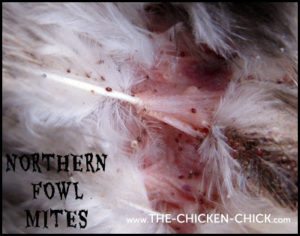
Mites and poultry lice damage the feathers and skin of chickens, often causing bald spots. Irritation from these external parasites causes a bird to pick their own feathers and skin to obtain relief.
SOLUTION
Monitor the skin and feather health of birds routinely for external parasites. Treat all birds and coop when an infestation is discovered. Provide dust bathing areas for birds to maintain the health and appearance of their skin and feathers. Loose sand or dirt are sufficient for dust bathing purposes- no additives are required, helpful, nor necessary. Never use food grade diatomaceous earth with backyard chickens for reasons explained here. It is hazardous to chickens in a variety of ways and cancer causing in humans.
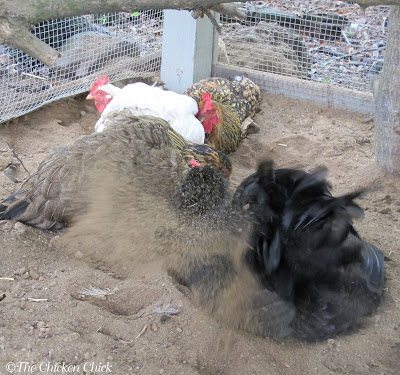
Chickens dust bathing in sand in the chicken run.
NEST BOXES- TOO FEW OR TOO PUBLIC
Too few nest boxes: Hens will fight over nest box space, using their beaks to express their preferences. A shortage of nest boxes can result in feather picking and injuries.
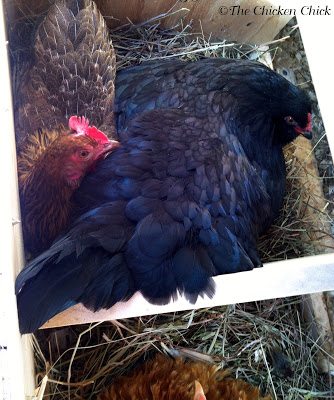
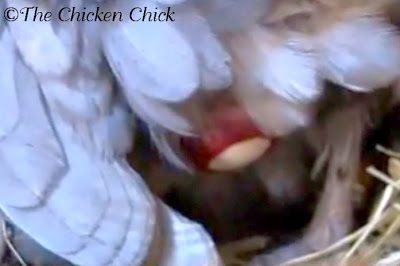
Too public: When a hen lays an egg, her cloaca becomes visible as it escorts the egg out of her body. The sight of a red, moist cloaca can attract curious flock members who naturally investigate by pecking the area. This can lead to picking, injury and cannibalism.
SOLUTIONS
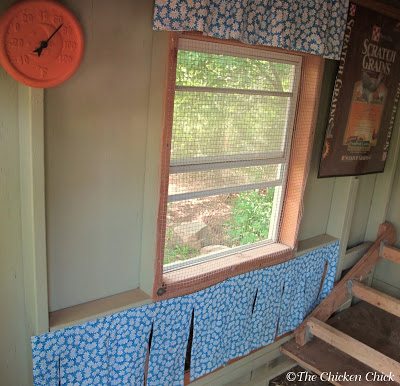
Make available one nest box for every four hens in a flock. Keep the nesting area dimly lit and private. Hang nest box curtains to ensure privacy, reduce stress and keep the cloaca from public view during egg-laying.
Egg laying is a particularly vulnerable time for hens. Nest box curtains provide privacy and safety.
TOO MUCH LIGHT
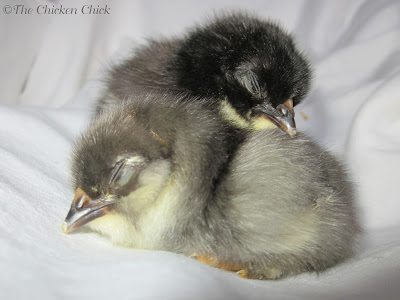
Lights that are too bright or lights that are kept on too long can cause boredom, stress, aggression and picking. Lights kept on in brooders 24 hours per day often result in chicks picking themselves or each other.
SOLUTION
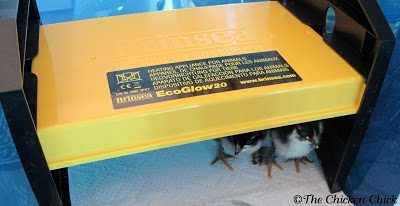
Limit the number of hours of light hours to 16 per day for chickens of all ages. Use a radiant heat source such as a Brinsea EcoGlow that does not employ light at all, allowing chicks to benefit from natural diurnal sleep-wake cycles.
OVERHEATING, Particularly in Brooders
Just as people can become irritable and prickly in the heat, so too can chickens. Chicks in brooders are at particular risk of being overheated when heat lamps are employed and overheating can result in agitation and pecking.
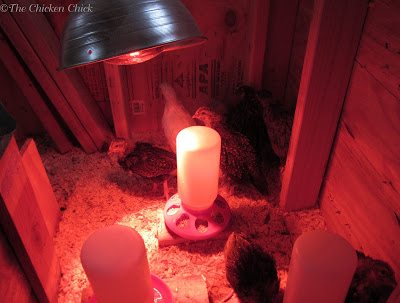
Use a radiant heat source for keeping chicks warm, avoiding any possibility of overheating entirely. Brinsea EcoGlow brooders are one such radiant heat option.
STRESS
Many of the above cited conditions fall into the catch-all category of stress. Chickens do not manage stress well and it can result in feather picking and cannibalism.
Some of the most common stressors include: housing changes, excessive heat, excessive light, overcrowding, predator attacks, new flock members, lost flock members and change of any type.
CARE OF INJURED BIRDS
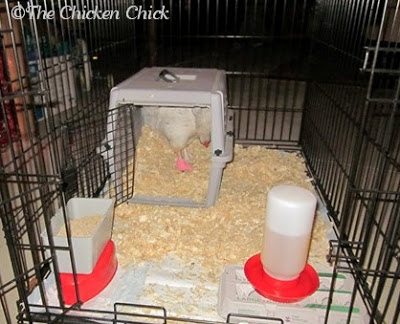
Any time a bird is injured from feather picking or the skin is compromised, the bird must be housed separately from the flock until the injury is completely healed to avoid further injury, cannibalism and death. Much more about the care of an injured chicken HERE.

Kathy Shea Mormino
Affectionately known internationally as The Chicken Chick®, Kathy Shea Mormino shares a fun-loving, informative style to raising backyard chickens. …Read on




shop my SPONSORS





I get lots of questions on my Facebook page about chicken feather loss, usually asking how to stop it, but before any solution can be suggested, the underlying problem must be identified. Feather loss and bald spots are often the result of stress-related conditions that must be fixed so that feather picking does not degenerate into a flock-wide problem. Chickens are cannibals and they learn to pick from each other, so ending unwanted picking as soon as it begins is critical to avoiding a bloody epidemic.
MOST COMMON CAUSES OF FEATHER LOSS
MOLTING
Bald spots are common in chickens during a molt. Molting is the natural, regular shedding of old feathers and growth of new ones. Chickens molt in a predictable order beginning at the head and neck, proceeding down the back, breast, wings and tail. Molting occurs at fairly regular intervals for each chicken, and ordinarily begins as daylight hours shorten at the end of summer, however, it can occur at any time due to lack of water, food, or sudden change in normal lighting conditions.
SOLUTION
Learn the normal molting patterns of flock members so that bald spots due to molting are recognized as normal. Be alert for broken pin feathers and pecking from other flock members. Separate any bird with damaged or bleeding pin feathers from the flock to prevent further injury.
BROODINESS
A broody hen is one that is inspired to sit on a collection of eggs until she hatches chicks. She plucks her own breast feathers to expose the warmth and moisture of her skin directly to the eggs, hence the expression “to feather one’s nest.” After a period of broodiness, a hen’s hormones begin to return to normal levels as do her eating and drinking routines, all of which results in the loss of large amounts of feathers. Broody hens tend to molt furiously after a period of broodiness as they resume eating and drinking habits.
SOLUTION
Break up broody hens that will not be permitted to hatch eggs to stop the hormone roller-coaster and prevent a prolonged interruption in normal eating, drinking and elimination routines.
After a hen has hatched chicks, feed her and her chicks with starter ration, which is higher in protein that the layer feed she had been eating prior to becoming broody and will help supply her with the protein needed for feather re-growth.
OVERCROWDING
A chicken is naturally inclined to forage for food by scratching and pecking at the ground. When too many chickens occupy too small a space, pecking opportunities are limited and chickens get on each other’s nerves.
Aggression can result from overcrowding which leads to feather picking and cannibalism. Birds with little personal space will also begin picking at novelties on one another such as a fleck of dirt, a pin feather shaft, or an insect. Innocent exploration can easily result in small skin wounds.
Chickens are drawn to the sight of blood and one small skin wound can quickly become life-threatening injuries inflicted by many chickens. By nature, chickens are cannibalistic- they can and will kill another chicken.
SOLUTION
Space is one of the keys to happy, healthy chickens. The bare minimum space requirements are four square feet per bird in the coop and ten square feet per bird in the run. If chickens will be confined primarily to the coop and run daily, a much greater space allowance must be made to avoid feather picking and boredom.
BOREDOM
Just as with children, bored chickens will get into mischief. Chickens that are confined primarily to the coop and run daily are more inclined to begin feather picking out of boredom and curiosity than free-range chickens.
Free-range chickens seldom run into trouble with boredom, but when inclement weather prohibits free-ranging, boredom-busting activities can be offered.
Chickens kept on a restricted feeding program, versus a free-feeding regimen, may become bored in between feedings, leading to feather picking and problem pecking of each other.
SOLUTIONS
Same solution as overcrowding, above and introduce boredom-buster type activities. Always free-feed chickens instead of rationing their food several times per day. The full-time job of a chicken is eating and their digestive tract is designed to hold and process small amounts of food at a time. Chickens require access to a nutritionally complete chicken feed all day, every day. Being allowed to pick up small amounts of feed often throughout the day gives them the tools to do their job, eliminates competition for feed, and provides an activity with a purpose.
Provide feed in crumbles form instead of pellets to extend the amount of time birds spend procuring feed to satisfy their appetites. Treats or snacks can be employed as an occasional distraction in small amounts, but should not be relied upon as a primary form of entertainment. Remove treats after 15 minutes.
No more than 5% of a chicken’s diet should consist of extras other than layer feed to ensure the consistent consumption of a balanced diet.
NUTRITIONAL DEFICIENCIES
Laying hens are sensitive to omissions in nutrient imbalance. An unbalanced diet can result in behavior problems such as excessive picking at their own preen gland, the feathers around it and feathers of other birds. Feeding chickens too many treats/snacks/kitchen scraps can interfere with daily nutritional requirements, causing aggression and problem picking behaviors.
SOLUTION
Provide a nutritionally complete feed appropriate for the age of the bird. Limit treats/snacks/extras to 5% of their total daily diet. Better yet, skip the treats entirely as chickens do not benefit from them.
When a rooster assumes the mating position on top of a hen, he balances himself by holding onto her neck feathers with his beak and standing on her back (also known as treading).
Over time, treading can result in feather loss to both areas of the hen’s back. Roosters can favor particular hens, giving them more attention than others, thereby causing excessive damage to their feathers and skin.
Chicken Chick® Hen Mating Saddles protect both wings and back feathers and they are available in three different sizes.
SOLUTIONS
Ensure a reasonable rooster-to-hen ratio of no less than ten hens per rooster. Trim or file a rooster’s nails to minimize feather and skin damage to the hen. Use a hen mating saddle for the affected hen. A hen mating saddle is a cloth garment worn by a hen for the purpose of protecting her feathers and skin.
House the rooster apart from the hens or pen his favorite hens away from him when necessary.
Mites and poultry lice damage the feathers and skin of chickens, often causing bald spots. Irritation from these external parasites causes a bird to pick their own feathers and skin to obtain relief.
SOLUTION
Monitor the skin and feather health of birds routinely for external parasites. Treat all birds and coop when an infestation is discovered. Provide dust bathing areas for birds to maintain the health and appearance of their skin and feathers. Loose sand or dirt are sufficient for dust bathing purposes- no additives are required, helpful, nor necessary. Never use food grade diatomaceous earth with backyard chickens for reasons explained here. It is hazardous to chickens in a variety of ways and cancer causing in humans.
Chickens dust bathing in sand in the chicken run.
NEST BOXES- TOO FEW OR TOO PUBLIC
Too few nest boxes: Hens will fight over nest box space, using their beaks to express their preferences. A shortage of nest boxes can result in feather picking and injuries.
Too public: When a hen lays an egg, her cloaca becomes visible as it escorts the egg out of her body. The sight of a red, moist cloaca can attract curious flock members who naturally investigate by pecking the area. This can lead to picking, injury and cannibalism.
SOLUTIONS
Make available one nest box for every four hens in a flock. Keep the nesting area dimly lit and private. Hang nest box curtains to ensure privacy, reduce stress and keep the cloaca from public view during egg-laying.
Egg laying is a particularly vulnerable time for hens. Nest box curtains provide privacy and safety.
TOO MUCH LIGHT
Lights that are too bright or lights that are kept on too long can cause boredom, stress, aggression and picking. Lights kept on in brooders 24 hours per day often result in chicks picking themselves or each other.
SOLUTION
Limit the number of hours of light hours to 16 per day for chickens of all ages. Use a radiant heat source such as a Brinsea EcoGlow that does not employ light at all, allowing chicks to benefit from natural diurnal sleep-wake cycles.
OVERHEATING, Particularly in Brooders
Just as people can become irritable and prickly in the heat, so too can chickens. Chicks in brooders are at particular risk of being overheated when heat lamps are employed and overheating can result in agitation and pecking.
Use a radiant heat source for keeping chicks warm, avoiding any possibility of overheating entirely. Brinsea EcoGlow brooders are one such radiant heat option.
STRESS
Many of the above cited conditions fall into the catch-all category of stress. Chickens do not manage stress well and it can result in feather picking and cannibalism.
Some of the most common stressors include: housing changes, excessive heat, excessive light, overcrowding, predator attacks, new flock members, lost flock members and change of any type.
CARE OF INJURED BIRDS
Any time a bird is injured from feather picking or the skin is compromised, the bird must be housed separately from the flock until the injury is completely healed to avoid further injury, cannibalism and death. Much more about the care of an injured chicken HERE.






I have 7 hens most have no feathers covering their back or butt area and it’s been like this for a while except for the head hen and a couple others. Is it because they are bored? I feed them X brand feed and I sometimes give them meal worms and dried beetles. This is my first time owning chickens and I’m at a loss where to start. I was reading your article about separating chickens if they are injured which I didn’t know but I have no where to separate them. May I have some guidance? Thank you for… Read more »
Your birds are unquestionably malnourished. The type of feed you’re giving them allows them to select particular bits and leave others behind. Chickens require a specific balance of ~38 nutrients every day to support their health. Not only are they leaving behind the balanced nutrition in the feeder, their diet is FURTHER DILUTED by the treats/extras you’re giving them. The advice is to purchase a reputable brand of feed in PELLET or CRUMBLE form and discontinue offering all other food items. Only give them layer feed with a side dish of oyster shells.
I have 8 hens. They are free range twice a day. Then back in coop and run. All 8 molted this last fall and into winter. My 2 jersey giants also lost a few leg feathers. Four of them have not regrown feathers on their bottoms. Why are their butts bare ???
What do you feed them? Any treats, supplements, vegetables, kitchen scraps, scratch, cracked corn, etc?