

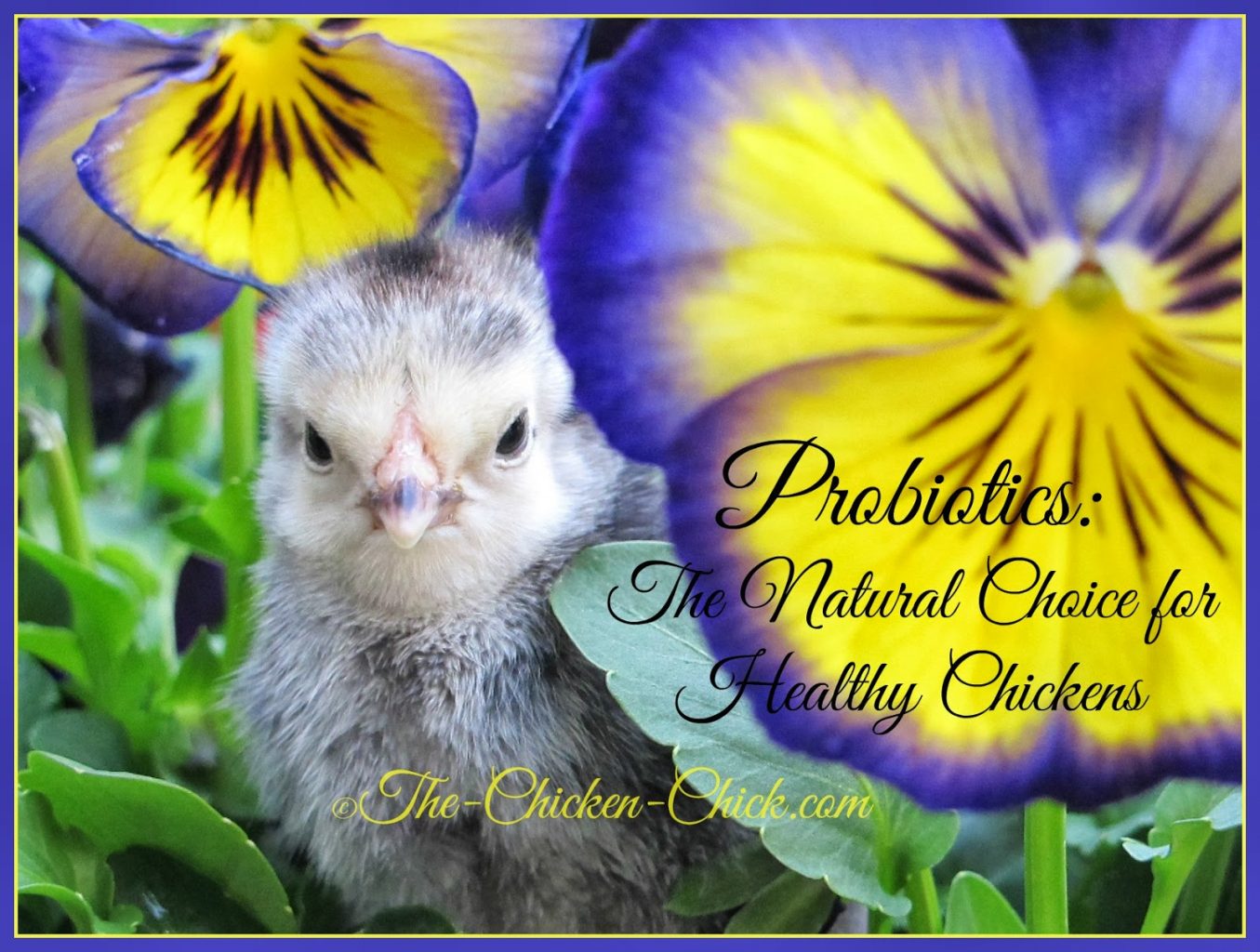
There is a mistaken belief that Salmonella is transmitted to people primarily through dirty egg shells when, in fact, most cases of the illness are the result of an egg that was infected with Salmonella inside the hen’s ovary. Probiotics given to baby chicks reduces the risk of Salmonella in eggs and disease later in life. 
WHAT ARE PROBIOTICS?
Probiotics are live, nonpathogenic bacteria that contribute to the health and balance of the intestinal tract. These good bacteria can strengthen the immune system and help chickens digest food more efficiently, helping them stay healthy and grow better. Most of us are familiar with the benefits that bacterial cultures in yogurt contribute to our own digestive health and some chicken-keepers give yogurt to their chickens to impart those same benefits. What many chicken-keepers do not know is that chickens are not equipped to
digest most dairy products and would be better served by ingesting the beneficial bacterial cultures alone.
I asked Dr. Rob McCoy, PhD, a poultry nutritionist, his opinion about feeding chickens dairy and he indicated that birds do not possess the enzymes necessary to properly digest milk sugars. Considering the fact that mother birds do not nurse their young, it makes perfect sense. Feeding chickens a little yogurt occasionally is fine, but too much dairy can cause digestive upset and diarrhea. A better choice would be to give chickens probiotics specially formulated for them. Fortunately, most chicken feeds now contain probiotics and prebiotics already!
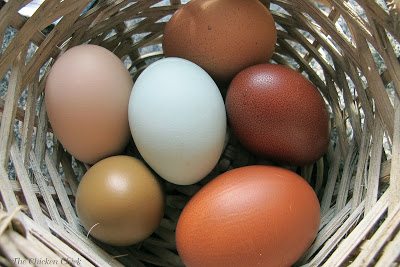
A University of Guelph professor and an Agriculture and Agri-Food Canada food researcher have found that giving chickens probiotics stimulates their immune system and reduces the Salmonella bacteria in their gut by more than 99 percent.
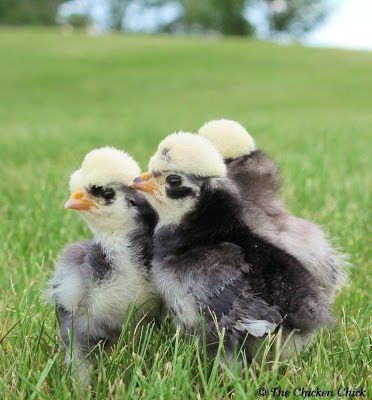
The Inside Story About Salmonella Transmission: Egg Yolk Russian Roulette
In the commercial poultry industry, “stringent procedures for cleaning and inspecting eggs were implemented in the 1970s (which) made illness from Salmonella caused by chicken feces on the outside of egg shells extremely rare. However, unlike Salmonella infections from eggs in past decades, the epidemic that started in the 1980s and continues to cause illnesses today is due to SE (Salmonella enteritidis) being inside intact eggs with clean shells. The reason is that SE can silently infect the ovaries of healthy appearing hens and contaminate the inside eggs before the shells are formed. (A)n infected hen can lay many normal eggs while only occasionally laying eggs contaminated with SE. Chickens raised for meat can also be contaminated with SE.” source
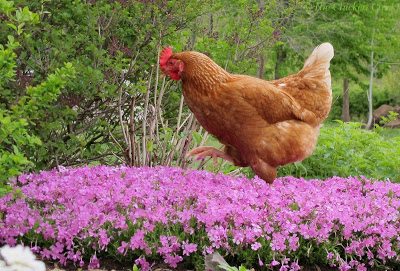
A research team with the University of Arkansas studying the effects of probiotics on young chicks has found that giving probiotics to newly hatched chicks helps to keep them from developing and passing on diseases in later life, including Salmonella Enteritis. This information is significant, particularly for backyard chicken-keepers- providing backyard chickens with probiotics gives them the best chance to live a healthy, productive life, staving off illness and bacteria, including Salmonella.
“Both the small and large intestines normally are populated with beneficial organisms (bacteria, yeast, etc.), referred to as microflora (micro meaning “small” and flora meaning “plants”). These microflora aid in digestion. When chicks hatch, their digestive tracts are virtually sterile. If raised by a mother hen, a chick obtains the beneficial microflora by consuming some of its mother’s fecal material. In artificial incubation and brooding, chicks do not have this option. In such situations, producers can provide the chicks with probiotics, which are preparations containing the beneficial microflora that normally inhabit a chicken’s digestive tract. Through the probiotics, the chicks receive the beneficial bacteria they need to fight off infections by pathogenic bacteria, such as salmonella.” Avian Digestive System
What can probiotics do for backyard laying hens?
- support egg production, size and quality
- keep bad bacteria at bay. Probiotics acidify the gut, reduce pH, compete with bad bacteria, elbowing it out, aka: competitive exclusion.
- improve absorption of nutrients in feed, decreasing feed costs
- stimulate the immune system
There is no egg withdrawal period required when given to laying hens. Again, most chicken feeds already contain probitics and prebiotics and there is no need or benefit to providing more.
Sources and links below for further reading.
Probiotics Protect Poultry from Pathogens, Eileen Herrera, USDA-ARS Office of International Research Programs.
Avian Digestive System, Dr. Jacquie Jacob, University of Kentucky
University of Guelph, Campus News:Probiotics Help Produce Safer, Healthier Chickens, Researchers Discover, Dec.12, 2006. Sharif, Shayan
Probiotic and Prebiotic Application in Chickens, Bailey, J.Stan, USDA, ARS, BEAR, Athens,GA
Probiotics/direct fed microbials for Salmonella control in poultry, Tellez, Pixley, Wolfenden, Layton, Hargis, Department of Poultry Science, University of Arkansas (2012)

Kathy Shea Mormino
Affectionately known internationally as The Chicken Chick®, Kathy Shea Mormino shares a fun-loving, informative style to raising backyard chickens. …Read on




shop my SPONSORS




There is a mistaken belief that Salmonella is transmitted to people primarily through dirty egg shells when, in fact, most cases of the illness are the result of an egg that was infected with Salmonella inside the hen’s ovary. Probiotics given to baby chicks reduces the risk of Salmonella in eggs and disease later in life.
WHAT ARE PROBIOTICS?
Probiotics are live, nonpathogenic bacteria that contribute to the health and balance of the intestinal tract. These good bacteria can strengthen the immune system and help chickens digest food more efficiently, helping them stay healthy and grow better. Most of us are familiar with the benefits that bacterial cultures in yogurt contribute to our own digestive health and some chicken-keepers give yogurt to their chickens to impart those same benefits. What many chicken-keepers do not know is that chickens are not equipped to
digest most dairy products and would be better served by ingesting the beneficial bacterial cultures alone.
I asked Dr. Rob McCoy, PhD, a poultry nutritionist, his opinion about feeding chickens dairy and he indicated that birds do not possess the enzymes necessary to properly digest milk sugars. Considering the fact that mother birds do not nurse their young, it makes perfect sense. Feeding chickens a little yogurt occasionally is fine, but too much dairy can cause digestive upset and diarrhea. A better choice would be to give chickens probiotics specially formulated for them. Fortunately, most chicken feeds now contain probiotics and prebiotics already!
A University of Guelph professor and an Agriculture and Agri-Food Canada food researcher have found that giving chickens probiotics stimulates their immune system and reduces the Salmonella bacteria in their gut by more than 99 percent.
The Inside Story About Salmonella Transmission: Egg Yolk Russian Roulette
In the commercial poultry industry, “stringent procedures for cleaning and inspecting eggs were implemented in the 1970s (which) made illness from Salmonella caused by chicken feces on the outside of egg shells extremely rare. However, unlike Salmonella infections from eggs in past decades, the epidemic that started in the 1980s and continues to cause illnesses today is due to SE (Salmonella enteritidis) being inside intact eggs with clean shells. The reason is that SE can silently infect the ovaries of healthy appearing hens and contaminate the inside eggs before the shells are formed. (A)n infected hen can lay many normal eggs while only occasionally laying eggs contaminated with SE. Chickens raised for meat can also be contaminated with SE.” source
A research team with the University of Arkansas studying the effects of probiotics on young chicks has found that giving probiotics to newly hatched chicks helps to keep them from developing and passing on diseases in later life, including Salmonella Enteritis. This information is significant, particularly for backyard chicken-keepers- providing backyard chickens with probiotics gives them the best chance to live a healthy, productive life, staving off illness and bacteria, including Salmonella.
“Both the small and large intestines normally are populated with beneficial organisms (bacteria, yeast, etc.), referred to as microflora (micro meaning “small” and flora meaning “plants”). These microflora aid in digestion. When chicks hatch, their digestive tracts are virtually sterile. If raised by a mother hen, a chick obtains the beneficial microflora by consuming some of its mother’s fecal material. In artificial incubation and brooding, chicks do not have this option. In such situations, producers can provide the chicks with probiotics, which are preparations containing the beneficial microflora that normally inhabit a chicken’s digestive tract. Through the probiotics, the chicks receive the beneficial bacteria they need to fight off infections by pathogenic bacteria, such as salmonella.” Avian Digestive System
What can probiotics do for backyard laying hens?
- support egg production, size and quality
- keep bad bacteria at bay. Probiotics acidify the gut, reduce pH, compete with bad bacteria, elbowing it out, aka: competitive exclusion.
- improve absorption of nutrients in feed, decreasing feed costs
- stimulate the immune system
There is no egg withdrawal period required when given to laying hens. Again, most chicken feeds already contain probitics and prebiotics and there is no need or benefit to providing more.
Sources and links below for further reading.
Probiotics Protect Poultry from Pathogens, Eileen Herrera, USDA-ARS Office of International Research Programs.
Avian Digestive System, Dr. Jacquie Jacob, University of Kentucky
University of Guelph, Campus News:Probiotics Help Produce Safer, Healthier Chickens, Researchers Discover, Dec.12, 2006. Sharif, Shayan
Probiotic and Prebiotic Application in Chickens, Bailey, J.Stan, USDA, ARS, BEAR, Athens,GA
Probiotics/direct fed microbials for Salmonella control in poultry, Tellez, Pixley, Wolfenden, Layton, Hargis, Department of Poultry Science, University of Arkansas (2012)






Why not a natural home brew of Probiotics?