



Coccidiosis is a common and very serious problem in chickens and one that every chicken keeper should know about before the first chick’s feet hit the brooder floor. With a little common sense and good flock management practices, cocci can be controlled and easily treated when necessary.
READER ADVISORY: Actual photos of abnormal droppings below. 
WHAT IS COCCIDIOSIS?
Coccidiosis (aka: cocci) is a common intestinal disease caused by several species of parasites. The parasites rapidly multiply, damaging the intestinal lining, preventing chickens from absorbing nutrients from their food.
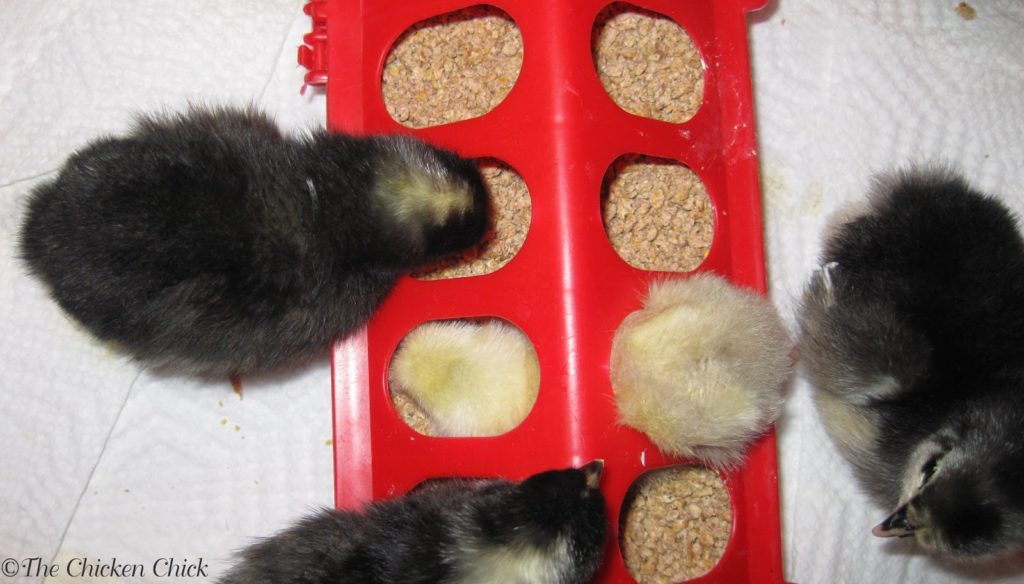
The microscopic cooties that cause cocci are everywhere. (of course that’s a technical term) Chickens can be affected by cocci even with the best coop sanitation and flock management practices. The key to keeping chickens healthy is learning to control the spread of the disease, recognizing the symptoms when they occur, obtaining a definitive diagnosis and knowing how to treat an affected bird.
SYMPTOMS
The most common symptoms of cocci are:
- diarrhea and/or blood and/or mucous in droppings
- lethargy, listlessness
- pale skin color
- loss of appetite
- weight loss in older chickens
- failure of chicks to grow/thrive
- progression of symptoms can be gradual or rapidly
result in death, particularly in chicks
HOW IS IT SPREAD?
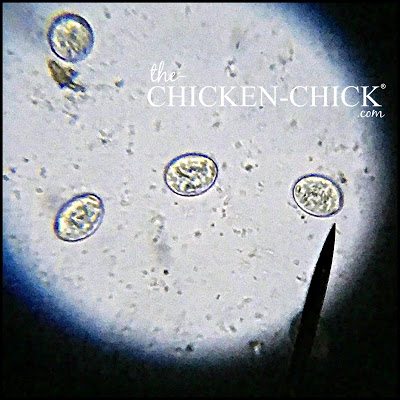
Microscopic eggs, called oocysts, are ingested, then multiply in the intestines and are expelled in droppings. The eggs can be carried by wild birds, chickens from different flocks, on a person’s shoes, clothing or equipment. Cocci is commonly transmitted through dirty water or contaminated food. There are a number of species of Coccidia that affect chickens and immunity can be acquired by gradual exposure over time.
An example of how easily flocks can become infected:
Farmer Fred’s flock appears healthy and possesses immunity to the particular species of oocysts living in his yard. Fred finishes up his morning coop chores and walks over to farmer Betty’s chicken yard with his shovel to help her dig some fence posts. Oocysts travel with him on the soles of his boots, his shovel and his clothes and are deposited in Betty’s yard. The grass is contaminated with the eggs, which is then eaten by Betty’s grazing hens and they get sick with coccidiosis within a week of the visit. Fred walks home, bringing oocysts from Betty’s yard with him to his hens on his boots and shovel and his birds began dying. Betty’s flock is not immune to the cocci species in Fred’s flock and vice versa.
PREVENTION
- Vaccinate day old chicks against coccidiosis. (many hatcheries offer this service at a nominal charge, but do not feed medicated starter feed to chicks that have been given this particular vaccine)
- Provide medicated starter feed to chicks that are not vaccinated for coccidiosis. (the vaccine and the medication in chick starter feed taken together renders chicks unprotected)
- Keep brooders and coops clean and dry. (warm, wet conditions such as soiled, damp, brooder bedding, provide the ideal environment for eggs to multiply quickly).
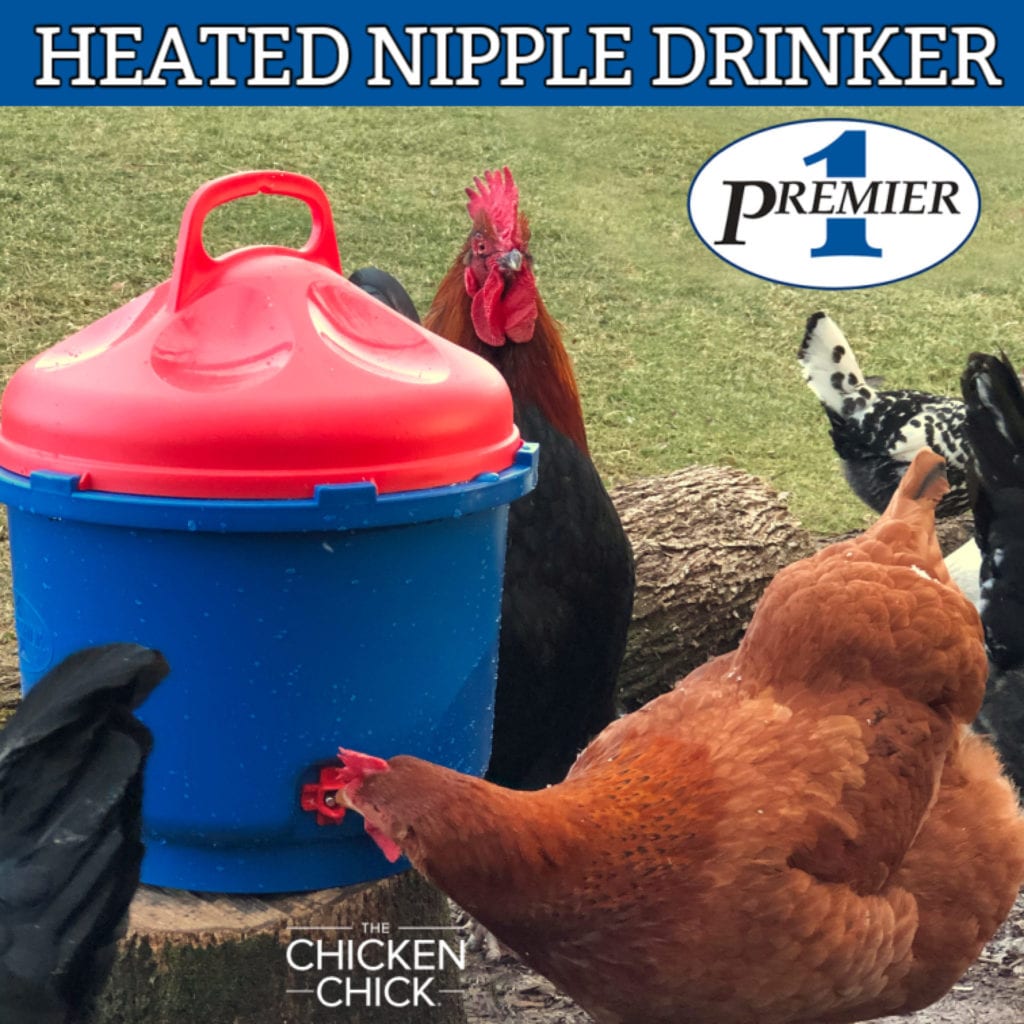
- Provide the cleanest water possible. (very seriously consider employing poultry nipple waterers)
- Don’t overcrowd living quarters (provide a minimum of: 4 square feet per adult
bird inside coops, 10 square feet per bird in the run, and 6 square inches of
brooder flooring for week old chicks) - Ensure adequate coop ventilation to promote dry litter.
- Promote acquire immunity by introducing chicks gradually to a properly maintained chicken yard and existing flock by 4 weeks old.
- Offer chicks probiotics in their water to promote competitive exclusion (the good guys beat out the bad guys inside the gut)
- Practice good bio-security, including quarantining new flock members for a bare minimum of two weeks, restricting access to your chicken yard by fellow
chicken-keepers, not sharing equipment with fellow chicken-keepers. (much more detail about proper quarantine here) - Keep waterfowl separate from chickens (spilled water + warmth=ideal conditions for breeding cocci)
- Don’t throw feed or treats on the ground where it can become contaminated.
DIAGNOSIS
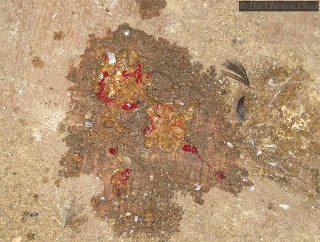
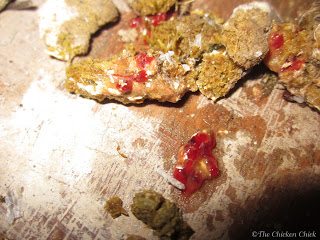
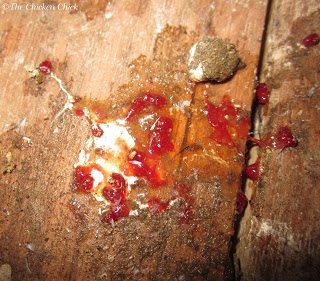
The only way to accurately diagnose cocci in living chickens is to have a fecal float test performed by a vet. Most veterinarians will gladly perform this test for a nominal fee, if any, even if they do not treat chickens. The following two photos illustrate that not all blood in droppings is caused by cocci or worms. Both of these samples were tested by my vet’s laboratory and were NEGATIVE for cocci and worms.
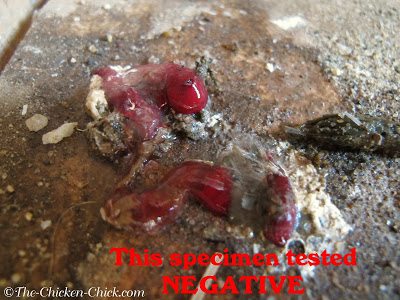
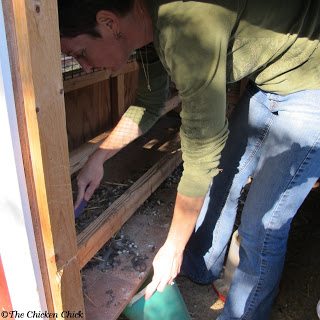
The sooner cocci is identified, the sooner treatment can begin and the lower the risk of death. It is extremely helpful to have a droppings board in the coop in order to make a daily droppings assessment. Abnormal or bloody droppings should be tested.
WARNING!
In the book, Hatching and Brooding Your Own Chicks, author Gail Damerow, leading authority on all things chicken, warns of the danger of the old wives’ tale that suggests coccidiosis can be prevented or cured by feeding herbs, garlic, vinegar, milk or yogurt. Damerow is emphatic in her response: “No. No. No. No. And no. These notions are dangerous and can jeopardize the health, and lives, of your [chicks]. Certain herbs, as well as vinegar and yogurt, may be used in moderation to enhance the immunity and overall health of poultry. But too much garlic can cause anemia and therefore is hazardous to their health. Milk, in more than minor quantities, causes diarrhea, which is not a healthful condition in baby birds, especially if they are already sick. Before modern drugs became available, milk sometimes was used as a flush to induce diarrhea to clean out the intestines of poultry infected with coccidiosis. Today, instead of spreading coccidial protozoa from the loosened bowels of infected birds, we have a variety of drugs called coccidiocides that destroy the parasites and reliably cure birds of the disease. A young bird with coccidiosis is a seriously ill bird. Don’t gamble with its life by treating it with ineffective alternative ‘natural’ products.” (emphasis added)
TREATMENT
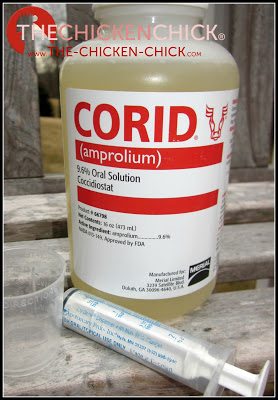
When one chicken is diagnosed with cocci, the entire flock must be treated. The chickens that produced the droppings in the following photos were diagnosed with cocci. Following the advice of my vet, I treated my flock with 9.5cc of liquid amprolium (brand name Corid) per gallon of water for 4 days. The droppings were free of blood within 24 hours of the first dose, however, in 2 weeks, they were again medicated for 3 additional days. (The vet indicated that given the life cycle of Eimeria, no bugs would be present to kill less than two weeks after stopping treatment, hence the 2 week break in dosing.)
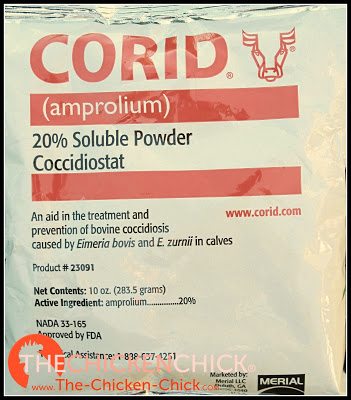
The dosage for Corid 20% Soluble Powder is 1/2 teaspoon per gallon of water. Offer as the only source of drinking water for 5 days.

NO EGG WITHDRAWAL PERIOD
Amprolium is approved for use in laying hens by the FDA, which means there is no egg withdrawal period. Eggs laid by hens may be eaten during and after treatment with amprolium.
POST-TREATMENT
AFTER the second round of treatment for cocci is completed, particularly when using amprolium, a vitamin supplement should be given to replace the Vitamin B1 lost during treatment. A product such as Nutri-Drench will do the trick.
VIEWER ADVISORY: The following video is an excellent presentation on the subject of cocci, however, it is extremely graphic and difficult to watch. There are overcrowding conditions and dead or dying birds shown in both clinical and brooder settings.
Further reading and sources:
http://cal.vet.upenn.edu/projects/parasit06/website/lab2.htm
http://www.accessdata.fda.gov/scripts/AnimalDrugsAtFDA/index.cfm?gb=2
http://animalhealth.pfizer.com/sites/pahweb/US/EN/Conditions/Pages/Coccidiosis.aspx
http://www.millerhatcheries.com/Information/Diseases/coccidiosis.htm
http://www.thepoultrysite.com/publications/2/Coccidiosis%20Management/46/drugs
The Chicken Health Handbook, Damerow, Gail. Storey Publishing, 1994.

Kathy Shea Mormino
Affectionately known internationally as The Chicken Chick®, Kathy Shea Mormino shares a fun-loving, informative style to raising backyard chickens. …Read on




shop my SPONSORS





Coccidiosis is a common and very serious problem in chickens and one that every chicken keeper should know about before the first chick’s feet hit the brooder floor. With a little common sense and good flock management practices, cocci can be controlled and easily treated when necessary.
READER ADVISORY: Actual photos of abnormal droppings below.
WHAT IS COCCIDIOSIS?
Coccidiosis (aka: cocci) is a common intestinal disease caused by several species of parasites. The parasites rapidly multiply, damaging the intestinal lining, preventing chickens from absorbing nutrients from their food.
The microscopic cooties that cause cocci are everywhere. (of course that’s a technical term) Chickens can be affected by cocci even with the best coop sanitation and flock management practices. The key to keeping chickens healthy is learning to control the spread of the disease, recognizing the symptoms when they occur, obtaining a definitive diagnosis and knowing how to treat an affected bird.
SYMPTOMS
The most common symptoms of cocci are:
- diarrhea and/or blood and/or mucous in droppings
- lethargy, listlessness
- pale skin color
- loss of appetite
- weight loss in older chickens
- failure of chicks to grow/thrive
- progression of symptoms can be gradual or rapidly
result in death, particularly in chicks
HOW IS IT SPREAD?
Microscopic eggs, called oocysts, are ingested, then multiply in the intestines and are expelled in droppings. The eggs can be carried by wild birds, chickens from different flocks, on a person’s shoes, clothing or equipment. Cocci is commonly transmitted through dirty water or contaminated food. There are a number of species of Coccidia that affect chickens and immunity can be acquired by gradual exposure over time.
An example of how easily flocks can become infected:
Farmer Fred’s flock appears healthy and possesses immunity to the particular species of oocysts living in his yard. Fred finishes up his morning coop chores and walks over to farmer Betty’s chicken yard with his shovel to help her dig some fence posts. Oocysts travel with him on the soles of his boots, his shovel and his clothes and are deposited in Betty’s yard. The grass is contaminated with the eggs, which is then eaten by Betty’s grazing hens and they get sick with coccidiosis within a week of the visit. Fred walks home, bringing oocysts from Betty’s yard with him to his hens on his boots and shovel and his birds began dying. Betty’s flock is not immune to the cocci species in Fred’s flock and vice versa.
PREVENTION
- Vaccinate day old chicks against coccidiosis. (many hatcheries offer this service at a nominal charge, but do not feed medicated starter feed to chicks that have been given this particular vaccine)
- Provide medicated starter feed to chicks that are not vaccinated for coccidiosis. (the vaccine and the medication in chick starter feed taken together renders chicks unprotected)
- Keep brooders and coops clean and dry. (warm, wet conditions such as soiled, damp, brooder bedding, provide the ideal environment for eggs to multiply quickly).
- Provide the cleanest water possible. (very seriously consider employing poultry nipple waterers)
- Don’t overcrowd living quarters (provide a minimum of: 4 square feet per adult
bird inside coops, 10 square feet per bird in the run, and 6 square inches of
brooder flooring for week old chicks) - Ensure adequate coop ventilation to promote dry litter.
- Promote acquire immunity by introducing chicks gradually to a properly maintained chicken yard and existing flock by 4 weeks old.
- Offer chicks probiotics in their water to promote competitive exclusion (the good guys beat out the bad guys inside the gut)
- Practice good bio-security, including quarantining new flock members for a bare minimum of two weeks, restricting access to your chicken yard by fellow
chicken-keepers, not sharing equipment with fellow chicken-keepers. (much more detail about proper quarantine here) - Keep waterfowl separate from chickens (spilled water + warmth=ideal conditions for breeding cocci)
- Don’t throw feed or treats on the ground where it can become contaminated.
DIAGNOSIS
The only way to accurately diagnose cocci in living chickens is to have a fecal float test performed by a vet. Most veterinarians will gladly perform this test for a nominal fee, if any, even if they do not treat chickens. The following two photos illustrate that not all blood in droppings is caused by cocci or worms. Both of these samples were tested by my vet’s laboratory and were NEGATIVE for cocci and worms.
The sooner cocci is identified, the sooner treatment can begin and the lower the risk of death. It is extremely helpful to have a droppings board in the coop in order to make a daily droppings assessment. Abnormal or bloody droppings should be tested.
WARNING!
In the book, Hatching and Brooding Your Own Chicks, author Gail Damerow, leading authority on all things chicken, warns of the danger of the old wives’ tale that suggests coccidiosis can be prevented or cured by feeding herbs, garlic, vinegar, milk or yogurt. Damerow is emphatic in her response: “No. No. No. No. And no. These notions are dangerous and can jeopardize the health, and lives, of your [chicks]. Certain herbs, as well as vinegar and yogurt, may be used in moderation to enhance the immunity and overall health of poultry. But too much garlic can cause anemia and therefore is hazardous to their health. Milk, in more than minor quantities, causes diarrhea, which is not a healthful condition in baby birds, especially if they are already sick. Before modern drugs became available, milk sometimes was used as a flush to induce diarrhea to clean out the intestines of poultry infected with coccidiosis. Today, instead of spreading coccidial protozoa from the loosened bowels of infected birds, we have a variety of drugs called coccidiocides that destroy the parasites and reliably cure birds of the disease. A young bird with coccidiosis is a seriously ill bird. Don’t gamble with its life by treating it with ineffective alternative ‘natural’ products.” (emphasis added)
TREATMENT
When one chicken is diagnosed with cocci, the entire flock must be treated. The chickens that produced the droppings in the following photos were diagnosed with cocci. Following the advice of my vet, I treated my flock with 9.5cc of liquid amprolium (brand name Corid) per gallon of water for 4 days. The droppings were free of blood within 24 hours of the first dose, however, in 2 weeks, they were again medicated for 3 additional days. (The vet indicated that given the life cycle of Eimeria, no bugs would be present to kill less than two weeks after stopping treatment, hence the 2 week break in dosing.)
The dosage for Corid 20% Soluble Powder is 1/2 teaspoon per gallon of water. Offer as the only source of drinking water for 5 days.
NO EGG WITHDRAWAL PERIOD
Amprolium is approved for use in laying hens by the FDA, which means there is no egg withdrawal period. Eggs laid by hens may be eaten during and after treatment with amprolium.
POST-TREATMENT
AFTER the second round of treatment for cocci is completed, particularly when using amprolium, a vitamin supplement should be given to replace the Vitamin B1 lost during treatment. A product such as Nutri-Drench will do the trick.
VIEWER ADVISORY: The following video is an excellent presentation on the subject of cocci, however, it is extremely graphic and difficult to watch. There are overcrowding conditions and dead or dying birds shown in both clinical and brooder settings.
Further reading and sources:
http://cal.vet.upenn.edu/projects/parasit06/website/lab2.htm
http://www.accessdata.fda.gov/scripts/AnimalDrugsAtFDA/index.cfm?gb=2
http://animalhealth.pfizer.com/sites/pahweb/US/EN/Conditions/Pages/Coccidiosis.aspx
http://www.millerhatcheries.com/Information/Diseases/coccidiosis.htm
http://www.thepoultrysite.com/publications/2/Coccidiosis%20Management/46/drugs
The Chicken Health Handbook, Damerow, Gail. Storey Publishing, 1994.







Hi… I wasn’t using medicated feed for my new chicks. Now they have coccidiosis! I’m treating them with Corid at the moment. Today is the first day. So after the 2nd round of Corid, can I give them medicated feed until they move outside? They’re about 5 weeks old and still in their brooder.
Thank you 😊 💓
If they were not vaccinated for coccidiosis you should feed them medicated starter feed until they are 18 weeks old.
They should be kept in a clean, DRY brooder.