



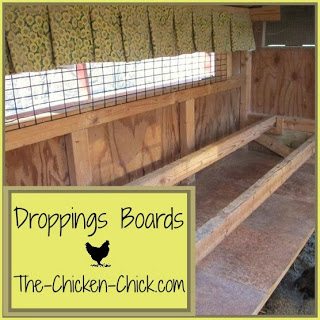
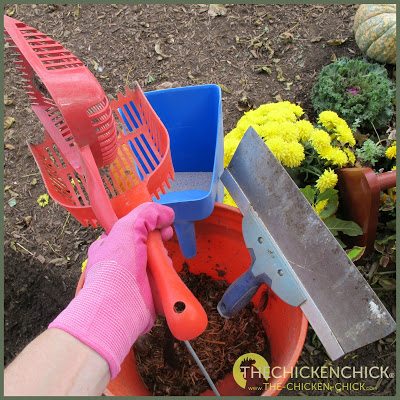
Droppings boards are essentially a shelf designed to collect chicken poop generated overnight. Most chicken-keepers scrape off the droppings boards (DBs) each morning. I use a 12″ taping knife and a big bucket, which makes quick work of the task. Then it goes directly to the compost pile.
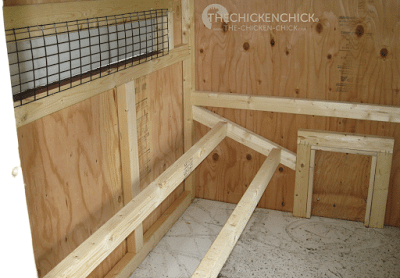 This was the state of my first chicken coop when it arrived.
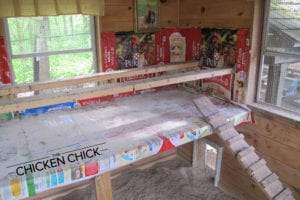
DBs can be made from many materials ranging from a simple plank of wood to a re-purposed kitchen countertop. Some droppings boards are permanently installed while others are removable. Removable droppings boards make for easy, semi-annual deep cleaning of the entire coop.
Some of the benefits of droppings boards are:
- they aid in keeping a coop clean since the night’s accumulation does not pile up in the litter
- cleaner litter means less frequent changing
- less frequent litter changes saves time and money
- less litter in the compost pile means a higher percentage of the compost is nitrogen-rich manure
- they provide a clear opportunity to assess the health of the chickens daily
- they reduce ammonia exposure, resulting in better conditions for chickens’ delicate respiratory systems
- they reduce flies by eliminating sources of moisture and odor
- they reduce the risk of frostbite in the cold by eliminating moisture from the coop
Our first attempt at coop droppings control was to install a droppings pit, which is simply a box on the floor under the roosts that collects the droppings. It is covered by chicken wire or hardware cloth (we tried both) to prevent the chickens from walking in the droppings. This design was short-lived; the droppings didn’t fall through the chicken wire as much as they stuck to it. The chickens would walk on the wire and drag shavings up onto it, making a big, matted mess that was a nightmare to clean.
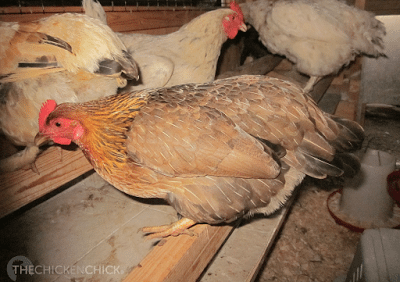
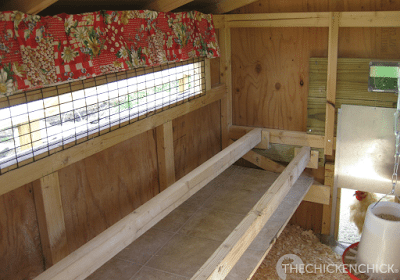
Enter: the first droppings board. We had to raise the roosts to accommodate the droppings board, which worked out well as I wanted removable roosts for cleaning purposes. The DB was made of a solid piece of wood with vinyl flooring stapled on top for ease of cleaning. It was heavy and difficult to move inside this 4’x6′ space.
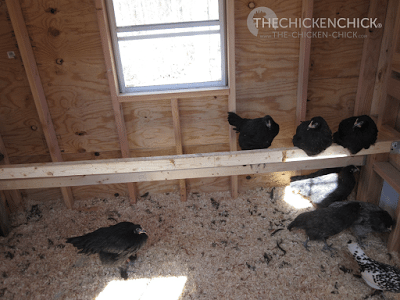
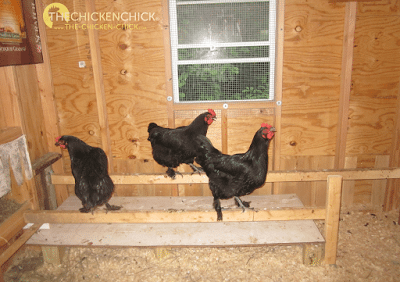
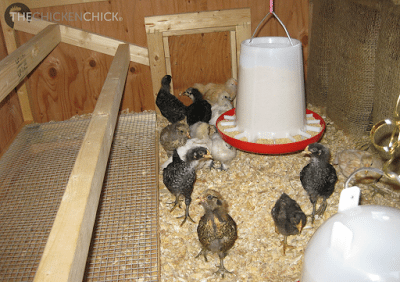
This is the Little Deuce coop, which can be seen in my here and here. We installed these temporary roosts so the Black Copper Marans chicks could move in but we intended to install a droppings board when time permitted. (They were molting when this shot was taken.)
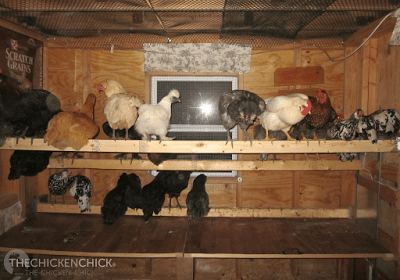
This was the original location and size of the droppings board. The nest boxes can be seen on the left. I was very unhappy with this design as the roost space was extremely limited and the droppings board didn’t span the length of the roosts. My husband’s rationale for this design was that access to the pop door would have been limited if it ran the length of the coop. We also had an electronic pop door opener on order and he thought its operation might be hampered with a longer droppings board.
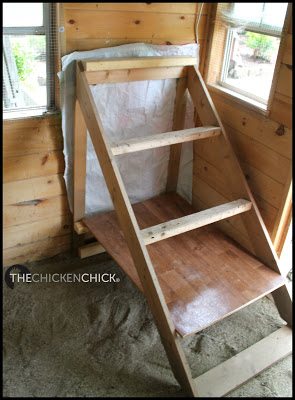
With the auto pop door opener installed, the droppings board spanned the width of the coop and did not interfere with the pop door or nest box access but the upper roosts were much too high and the lowest roost nearly touched the DB, which was unsatisfactory. Back to the drawing board.
We switched over to using sand as litter the same time we installed the final version of the droppings boards. One of the benefits of droppings boards AND sand is that they allow for the removal of a significant amount of moisture from the coop. Removing droppings from the coop keeps it drier, reducing the risk of frostbite, the risk of bumblefoot infections, and makes the air healthier for them to breathe.
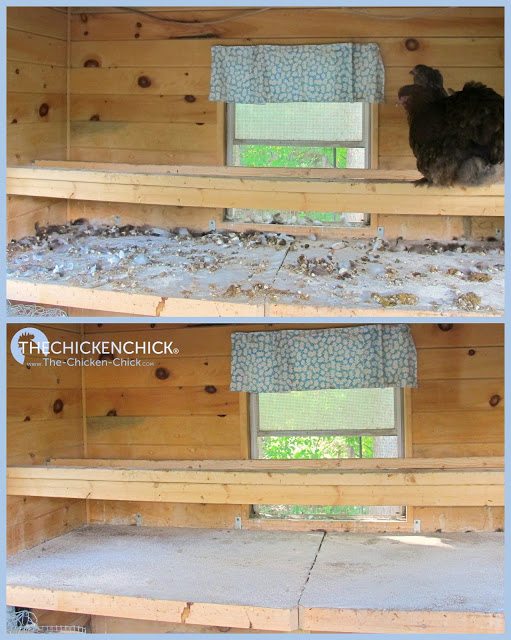
I use a 12″ taping knife to scrape down the droppings boards once each morning and the coop is CLEAN the rest of the day!
I add thin layer of Sweet Coop® to the droppings boards to absorb any residual moisture after scraping, which creates an inhospitable environment for flies and the generation of ammonia!
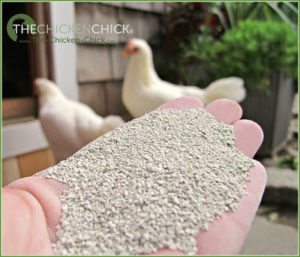
Sweet Coop® zeolite
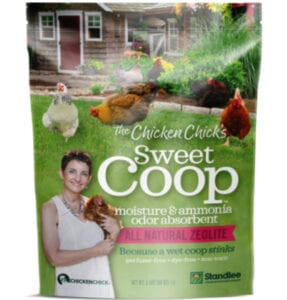
Sweet Coop®
Sweet Coop® is a phenomenal aid in maintaining a dry, fly-free coop! I use it on my droppings boards every time I clean them to eliminate residual moisture. Bonus: it works as a slow-release fertilizer in the garden after being composted with droppings!
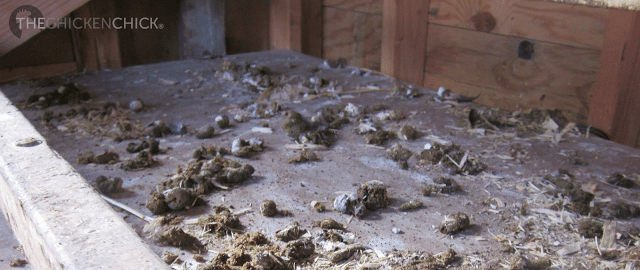
One of the useful things about a droppings board is that it provides the opportunity to learn what is happening with the chickens during the night and early morning hours. Sometimes there will have been a scuffle and blood that otherwise would have disappeared into the litter and droppings will be visible on the DB. That alerts me to look for a victim who may be sick, or injured and in need of attention.
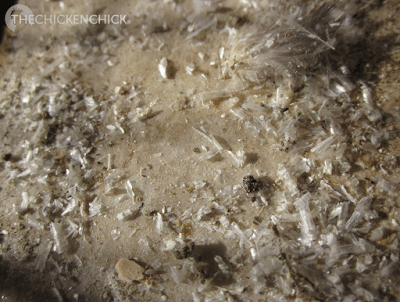
This particular morning, I found many new feather shaft casings on the DB, which told me that the hens’ new feathers were emerging, which is painful for chickens and they should not be handled if at all possible. The removal of the waxy casings isn’t painful but the emerging, vein-filled feather shafts are.
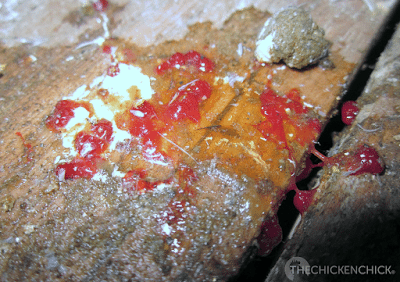
Another very important benefit of having droppings boards is that problem droppings are quickly detected. The morning prior to this installment, there were no abnormal droppings seen. Since I know the usual roost positions of my chickens, I knew exactly which hen had this advanced stage of coccidiosis.

Kathy Shea Mormino
Affectionately known internationally as The Chicken Chick®, Kathy Shea Mormino shares a fun-loving, informative style to raising backyard chickens. …Read on




shop my SPONSORS







Droppings boards are essentially a shelf designed to collect chicken poop generated overnight. Most chicken-keepers scrape off the droppings boards (DBs) each morning. I use a 12″ taping knife and a big bucket, which makes quick work of the task. Then it goes directly to the compost pile.
This was the state of my first chicken coop when it arrived.
DBs can be made from many materials ranging from a simple plank of wood to a re-purposed kitchen countertop. Some droppings boards are permanently installed while others are removable. Removable droppings boards make for easy, semi-annual deep cleaning of the entire coop.
Some of the benefits of droppings boards are:
- they aid in keeping a coop clean since the night’s accumulation does not pile up in the litter
- cleaner litter means less frequent changing
- less frequent litter changes saves time and money
- less litter in the compost pile means a higher percentage of the compost is nitrogen-rich manure
- they provide a clear opportunity to assess the health of the chickens daily
- they reduce ammonia exposure, resulting in better conditions for chickens’ delicate respiratory systems
- they reduce flies by eliminating sources of moisture and odor
- they reduce the risk of frostbite in the cold by eliminating moisture from the coop
Our first attempt at coop droppings control was to install a droppings pit, which is simply a box on the floor under the roosts that collects the droppings. It is covered by chicken wire or hardware cloth (we tried both) to prevent the chickens from walking in the droppings. This design was short-lived; the droppings didn’t fall through the chicken wire as much as they stuck to it. The chickens would walk on the wire and drag shavings up onto it, making a big, matted mess that was a nightmare to clean.
Enter: the first droppings board. We had to raise the roosts to accommodate the droppings board, which worked out well as I wanted removable roosts for cleaning purposes. The DB was made of a solid piece of wood with vinyl flooring stapled on top for ease of cleaning. It was heavy and difficult to move inside this 4’x6′ space.
This is the Little Deuce coop, which can be seen in my here and here. We installed these temporary roosts so the Black Copper Marans chicks could move in but we intended to install a droppings board when time permitted. (They were molting when this shot was taken.)
This was the original location and size of the droppings board. The nest boxes can be seen on the left. I was very unhappy with this design as the roost space was extremely limited and the droppings board didn’t span the length of the roosts. My husband’s rationale for this design was that access to the pop door would have been limited if it ran the length of the coop. We also had an electronic pop door opener on order and he thought its operation might be hampered with a longer droppings board.
With the auto pop door opener installed, the droppings board spanned the width of the coop and did not interfere with the pop door or nest box access but the upper roosts were much too high and the lowest roost nearly touched the DB, which was unsatisfactory. Back to the drawing board.
We switched over to using sand as litter the same time we installed the final version of the droppings boards. One of the benefits of droppings boards AND sand is that they allow for the removal of a significant amount of moisture from the coop. Removing droppings from the coop keeps it drier, reducing the risk of frostbite, the risk of bumblefoot infections, and makes the air healthier for them to breathe.
I use a 12″ taping knife to scrape down the droppings boards once each morning and the coop is CLEAN the rest of the day!
I add thin layer of Sweet Coop® to the droppings boards to absorb any residual moisture after scraping, which creates an inhospitable environment for flies and the generation of ammonia!
Sweet Coop® zeolite
Sweet Coop®
Sweet Coop® is a phenomenal aid in maintaining a dry, fly-free coop! I use it on my droppings boards every time I clean them to eliminate residual moisture. Bonus: it works as a slow-release fertilizer in the garden after being composted with droppings!
One of the useful things about a droppings board is that it provides the opportunity to learn what is happening with the chickens during the night and early morning hours. Sometimes there will have been a scuffle and blood that otherwise would have disappeared into the litter and droppings will be visible on the DB. That alerts me to look for a victim who may be sick, or injured and in need of attention.
This particular morning, I found many new feather shaft casings on the DB, which told me that the hens’ new feathers were emerging, which is painful for chickens and they should not be handled if at all possible. The removal of the waxy casings isn’t painful but the emerging, vein-filled feather shafts are.
Another very important benefit of having droppings boards is that problem droppings are quickly detected. The morning prior to this installment, there were no abnormal droppings seen. Since I know the usual roost positions of my chickens, I knew exactly which hen had this advanced stage of coccidiosis.








What kind of sand should be used in the coop?
I show you here: https://the-chicken-chick.com/chicken-coop-bedding-sand-litter/
Could you use kitty litter in with the sand to clump the poop?
Nooooo. Never use kitty litter with chickens. It is toxic.
I have a board installed under the roost, but I am having the problem that a number of my birds are trying to nest in the poop and laying on the board. They are all new layers, any suggestions? I can’t get them to use the nesting box which is under the roost and the board.
Just pick them up and place them on the roost after dark each night until they do it independently.